Why eating less stopped working for you, and the 2 doctor-guided GLP-1 options people are switching to
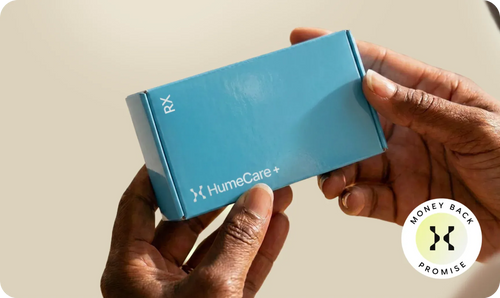
One option is a once-a-week GLP-1 injection you take at home. The other is a small daily tablet for people who don't like needles or want the simplest routine. Both come from the same U.S. telehealth program, HumeCare+, where a licensed clinician builds a personalized plan for each member and adjusts it over time. Here's how the two differ, what they cost, and what to ask before you start.
 Once a week
Weekly GLP-1 injection
One quick at-home dose, then nothing to think about for six days.
Check eligibility →
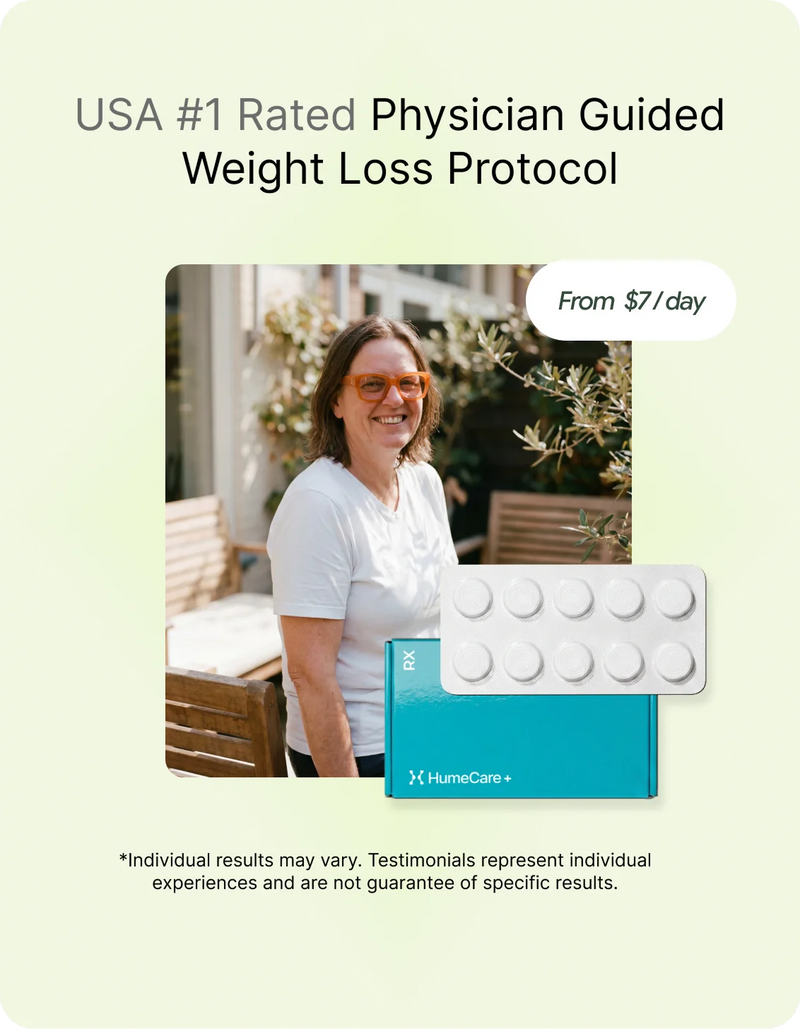 No needles
Daily GLP-1 tablet
One small tablet a day, no needles involved.
Check eligibility →
- Licensed U.S. clinicians
- Free online assessment
- Cancel anytime
- FSA/HSA accepted
- U.S. only
Why does eating less stop working?
You probably know the routine. Monday starts well: you track everything, skip dessert and push through the hunger. The scale drops a little. Then a long week or a birthday dinner gets in the way, the hunger comes back stronger, and a month later you're back where you started, sometimes a few pounds heavier.
People stuck in this loop usually aren't lazy, and they aren't uninformed. They've already done what everyone told them to do. If you've been there, some of this will sound familiar:
- You finish a full meal, and an hour later you're already thinking about a snack.
- You eat well all day, then lose it at 9 p.m. in front of the fridge.
- You do everything right for three weeks and the scale doesn't move.
- You lose 15 pounds, relax a little, and watch them come back.
- You skip photos, dread getting dressed, and can't figure out why it looks so much easier for everyone else.
Willpower was never the main problem. Your body fights to hold on to its weight, and it keeps fighting long after the diet ends.
When you cut calories, your body treats it as a shortage. The hormones that make you hungry go up, the ones that make you feel full go down, and your body burns less energy than expected for your new size.[1,2] In one well-known study, those hunger signals were still out of balance a full year after people finished a strict diet.[1] That's why each week of dieting feels harder than the last, and why the weight tends to come back once you stop pushing.
Where do GLP-1 medications come in?
GLP-1 is a hormone your gut releases after you eat. It tells your brain you've had enough and slows down how fast your stomach empties. GLP-1 medications copy that signal and make it last much longer. The best known are semaglutide (the ingredient in Wegovy and Ozempic) and tirzepatide (Zepbound and Mounjaro), which works on GLP-1 and a second gut hormone, GIP.
In practice, people on these medications describe the same thing: smaller portions feel like enough, and the constant background noise about food gets quieter. A study on weekly semaglutide measured exactly that, with less hunger, fewer cravings and better control over eating.[3]
The results in large trials are real but not magic. Adults on weekly semaglutide, along with diet and activity advice, lost about 15% of their body weight on average over 68 weeks, compared with about 2% on placebo.[4] The daily semaglutide pill approved for weight loss reached about 14% in 64 weeks, against 2% on placebo.[5] Some people lost much more, some much less.
Why we looked at HumeCare+
Most GLP-1 telehealth services sell you a prescription and a box. HumeCare+ is built around the service instead: a clinician sets a plan for your body, your history and your goals, then adjusts the medication and dose as you go. The data for those adjustments comes from the Hume Pod, a smart body scale included with every plan, which tracks fat and muscle separately. You can also pick between a weekly injection and a daily tablet inside the same program. HumeCare+ reports more than 20,000 members in the U.S.
What to know about the medication
Because every plan is personalized, HumeCare+ doesn't sell one fixed medication. The clinician chooses it, and the dose, for each member. On the weekly option that means compounded tirzepatide or compounded semaglutide, shipped in multi-dose vials. The daily tablet is compounded oral semaglutide, formulated for better absorption in pill form. Every prescription is written only after a physician reviews your medical history, and the medication is dispensed by a U.S.-licensed compounding pharmacy.
Once your plan is ready, ask the clinician three things: which medication and dose you'll get, how to measure it (for the vial), and which pharmacy prepares it.
Weekly injection or daily tablet: what's the difference?
Same program, two ways to take the medication. Both include clinician access, the Hume app, weekly body scans and monthly check-ins. They differ in how often you take them, whether there's a needle, and price.
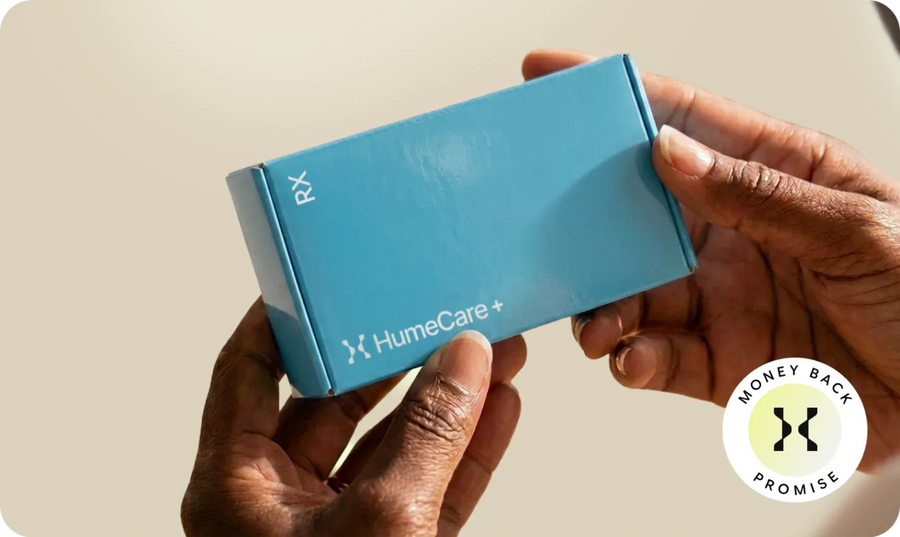
The Weekly Protocol
A small injection you give yourself at home, once a week. Depending on your prescription, it's compounded tirzepatide or compounded semaglutide, the same active ingredients studied in the big weekly-shot trials. A good fit if a tiny needle doesn't bother you and you'd rather not think about it every day.
Best if you:
- want to deal with it once a week and forget it the other six days
- are comfortable with a very small needle
- have tried diets before and want a clinician adjusting the dose as you go
Free assessment. 90-day money-back guarantee.
The Daily Oral Protocol
One small tablet a day, usually taken in the morning. Same program and support, for people who don't like needles or want the simplest start. It contains compounded oral semaglutide, the same active ingredient as the weekly shot, formulated for better absorption in pill form. The clinician sets the dose for your plan.
Best if you:
- don't like needles, or don't want to deal with them
- like having a simple daily habit
- travel often and need something that fits in a bag
Free assessment. 180-day money-back promise.
How do they compare side by side?
| Weekly injection | Daily tablet | |
|---|---|---|
| Format | At-home injection | Small tablet |
| Medication | Compounded tirzepatide or semaglutide (clinician decides) | Compounded oral semaglutide |
| How often | Once a week | Once a day |
| Needles | Yes, very small | None |
| Money-back guarantee | 90 days | 180 days |
| Clinician, app, body scale | Included | Included |
Price: plans range from $199 to $299 a month, depending on the medication your clinician prescribes. Prices and guarantees from the official HumeCare+ site in November 2026; check the current terms before you sign up. A licensed clinician decides eligibility, the medication and the dose.
Not sure which one fits you?
Answer three quick questions and we'll point you to one.
How do you feel about needles?
What matters more to you right now?
Which routine sounds more like you?
The Weekly Protocol
A small needle doesn't bother you and you like the idea of handling it once a week. That's the format with the most research behind it.
Weekly option: official site →The Daily Oral Protocol
You want something simple with no needles. One small tablet a day, with the same clinician support and body tracking as the weekly plan.
Daily tablet: official site →What comes with either option?
Plenty of programs ship you a box and leave it there. HumeCare+ adds ongoing support and tracking to the medication itself.
- A personalized planA licensed U.S. clinician reviews your health history, chooses the medication and dose, and adjusts the plan as your numbers change. You can message the care team when questions come up.
- Hume Pod body scaleTracks fat and muscle separately, so you see more than the number on the scale. Free with every plan as of November 2026 ($350 value).
- Hume Band 2.0Also included with every plan, alongside the Hume Pod.
- Two kinds of trackingA weekly body scan at home, plus a monthly body composition check-in that your clinician uses to adjust the plan.
- Glycine, B12 and B6Added to the protocol by HumeCare+ alongside the medication.
- The Hume appYour plan, food and progress log, and messages with your care team in one place.
- Free, discreet deliveryPlain packaging to your door. Refills ship automatically.
- No-fee cancellationYou can stop the refills anytime.
Why the number on the scale isn't enough
When you lose weight fast, part of what goes is lean mass, which includes muscle. In some GLP-1 studies that was close to half of the weight lost, in others much less.[7] Losing a lot of muscle can leave you tired and weaker, and it makes keeping the weight off harder. Tracking fat and muscle separately helps you and the clinician notice early. Eating enough protein and doing some strength training are still the most reliable ways to protect muscle.
Is it safe?
GLP-1 medications are prescription drugs, so this part matters more than with any supplement.
- The right dose is what keeps your stomach calm. Nausea, diarrhea, constipation or vomiting are the side effects people notice most, and they're closely tied to dosing: they mostly show up in the first weeks or right after a dose goes up, and are usually mild and short-lived.[4,5] That's why the clinician starts you on a low dose and raises it slowly. Taking more than prescribed, or going up faster than planned, makes them much more likely.
- Prescribed by a physician, dispensed by a licensed pharmacy. Your medication is prescribed only after a physician reviews your medical history, and it's dispensed by a U.S.-licensed compounding pharmacy that follows state and federal compounding rules.
- They aren't for everyone. The FDA labels of approved GLP-1s say not to use them if you or a family member has had medullary thyroid cancer or MEN 2, and they aren't used during pregnancy. Gallbladder problems and pancreatitis are rarer risks.[8]
- Be honest in the assessment. List every medication and condition, especially diabetes medicines, since the clinician can only work with what you tell them.
- Handle the vial with care. The weekly option comes in a multi-dose vial, so you draw each dose yourself. The FDA advises not to use an injectable GLP-1 that arrives warm, to use a new sterile needle and syringe every time, to throw the vial away 28 days after first use, and to ask exactly how to measure your dose.[6]
How do you get started?
- Take the free online assessment. A few minutes of questions about your goals and health history. Checking costs nothing and doesn't commit you.
- A clinician reviews it. If you qualify, a licensed U.S. clinician sets up the format you picked, weekly or daily. Ask about the medication and pharmacy at this step.
- It arrives at your door. From there you track progress and message your care team in the app.
HumeCare+ reports 20,000+ members and a 4.7/5 rating on Trustpilot. Available in the U.S., except Louisiana and Mississippi.
Common questions
Which works faster, the weekly injection or the daily tablet?
No study has compared HumeCare+'s two formats. With brand-name semaglutide, the weekly shot and the daily pill reached similar average weight loss in separate trials, about 15% and 14% over roughly 15 months. How fast you see change depends more on your dose, how your body responds and your habits than on the format.
I really don't like needles. Is the tablet worth it?
It can be. You get the same program, clinician access, app and body scale. The tablet is compounded oral semaglutide, the same active ingredient as the weekly shot, and the clinician sets your dose.
Is HumeCare+ FDA-approved?
HumeCare+ is a telehealth service, not a drug, so it isn't something the FDA approves. Your medication is prescribed only after a physician reviews your medical history and is dispensed by a U.S.-licensed compounding pharmacy. As HumeCare+ explains on its site, these pharmacies are licensed and inspected by state boards of pharmacy, while the FDA does not evaluate compounded medications themselves for safety, quality or efficacy.
How do I know if I'm eligible?
Take the free online assessment. A licensed U.S. clinician reviews your answers and health history and decides whether a GLP-1 is right for you. Checking costs nothing.
What if it doesn't work for me?
The official site lists a 90-day money-back guarantee on the weekly plan, a 180-day money-back promise on the daily plan, and a refund if you don't lose 10% of your body weight in six months. Each comes with conditions, so read the full terms on the official page before joining.
What about side effects?
Nausea and other stomach complaints are the most common, especially early on. The care team can adjust your dose. Share your full health history in the assessment so the clinician has the whole picture.
What happens if I stop?
Hunger usually returns, and studies show much of the lost weight tends to come back after stopping. Building habits you can keep, like protein at every meal and regular activity, makes the biggest difference.
Can I cancel? Can I use FSA or HSA funds?
Yes to both. Refills are automatic and you can cancel anytime without a fee. FSA and HSA cards are accepted.
Is it available in every state?
Not yet. As of November 2026 it isn't available in Louisiana or Mississippi, and it's for U.S. residents only.
Pick the option that fits your routine
The assessment is free. If you qualify, a clinician takes it from there.
Both links go to the official HumeCare+ site.Medical note: This guide is general information, not medical advice. GLP-1 medications require a prescription, and only a licensed clinician can decide if one is right for you. Results vary from person to person.
References
- Sumithran P, et al. Long-term persistence of hormonal adaptations to weight loss. N Engl J Med. 2011. doi:10.1056/NEJMoa1105816
- Rosenbaum M, Leibel RL. Adaptive thermogenesis in humans. Int J Obes. 2010. doi:10.1038/ijo.2010.184
- Blundell J, et al. Effects of once-weekly semaglutide on appetite, energy intake, control of eating, food preference and body weight in subjects with obesity. Diabetes Obes Metab. 2017. doi:10.1111/dom.12932
- Wilding JPH, et al. Once-weekly semaglutide in adults with overweight or obesity (STEP 1). N Engl J Med. 2021. doi:10.1056/NEJMoa2032183
- Wharton S, et al. Oral semaglutide at a dose of 25 mg in adults with overweight or obesity (OASIS 4). N Engl J Med. 2025. doi:10.1056/NEJMoa2500969
- U.S. Food and Drug Administration. FDA's concerns with unapproved GLP-1 drugs used for weight loss. Updated October 2026. fda.gov
- Neeland IJ, et al. Changes in lean body mass with glucagon-like peptide-1-based therapies and mitigation strategies. Diabetes Obes Metab. 2024. doi:10.1111/dom.15728
- U.S. National Library of Medicine. Wegovy (semaglutide) prescribing information, DailyMed. dailymed.nlm.nih.gov
- HumeCare+ official website, weekly and daily programs. humecare.com
We may earn a commission when you buy through links on this page. This never changes our rating. Learn more about our affiliate links